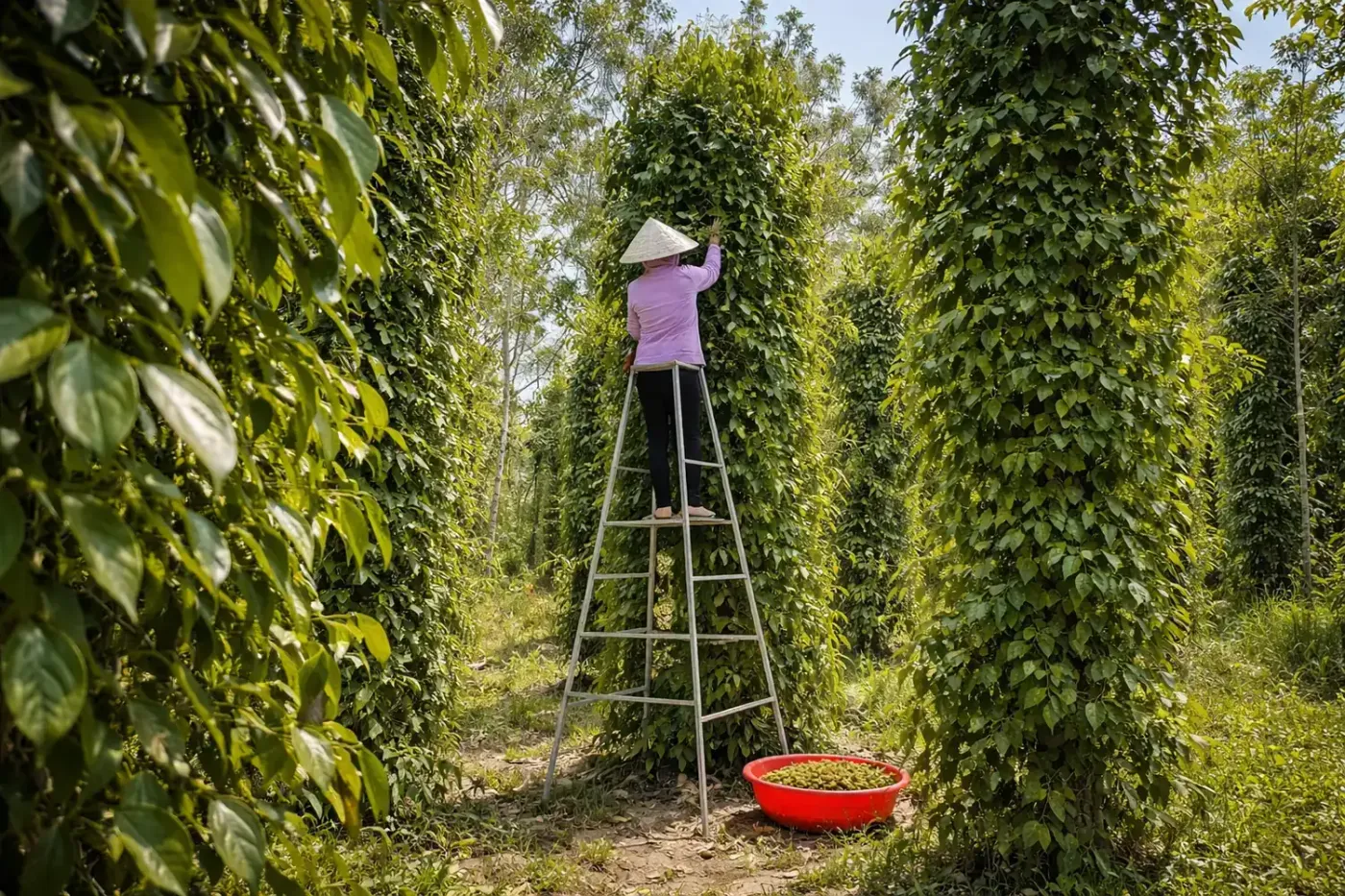
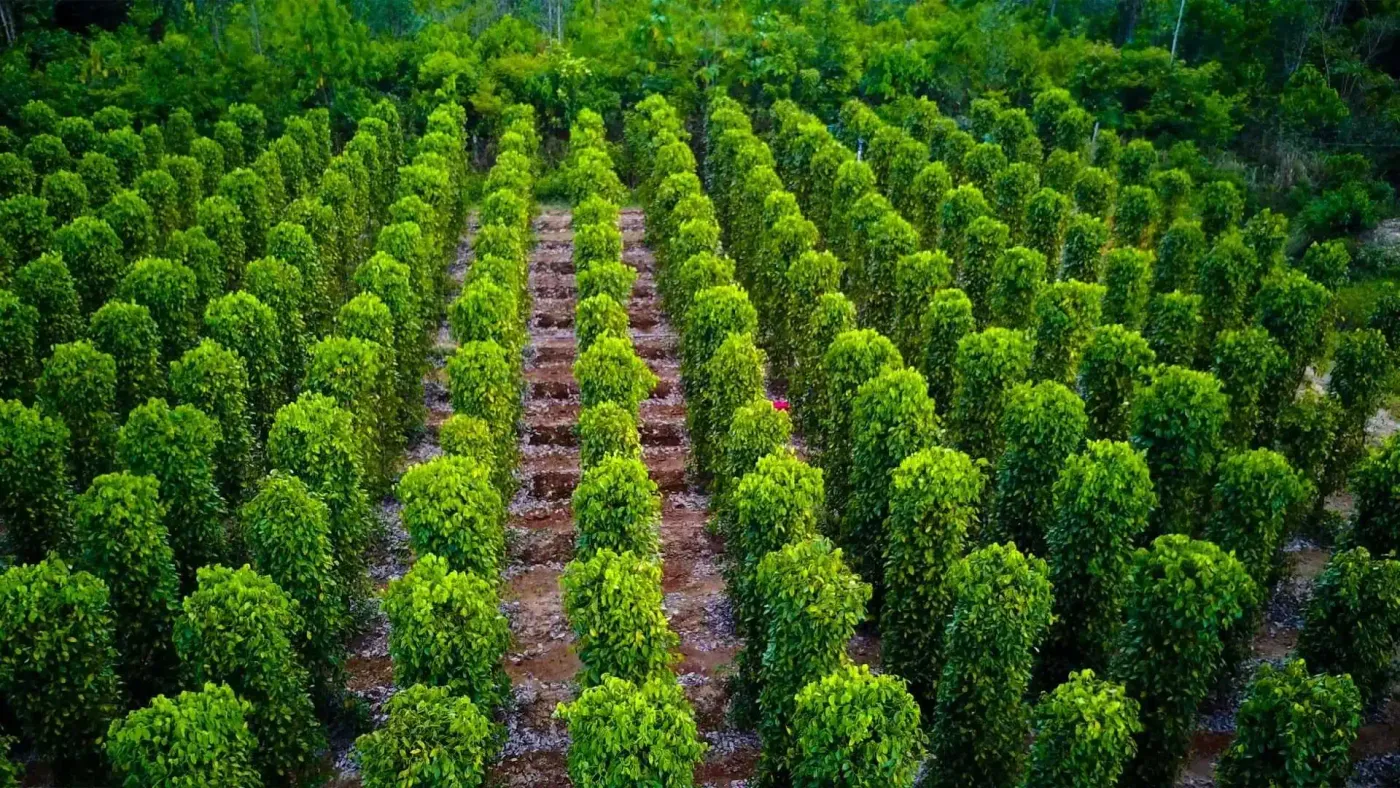
Pepper is one of the two products Phu Quoc is known for across Vietnam, along with fish sauce. Away from the beaches, the island's interior is dotted with family farms where the vines climb tall posts in neat green rows.
A farm stop is short and easy, and most people enjoy it more when they know what they are looking at. This guide covers what to expect, when the harvest really happens (local sources disagree, so we show you where), how to tell the types of pepper apart and how to get a bag home.
Quick facts about Phu Quoc pepper farms
- Where: mostly inland, with the best-known area at Khu Tuong (Cua Duong) in the north and more farms around Duong To, south of Duong Dong.
- Entry: usually free at family farms.
- Time needed: about 30 minutes.
- Hours: local listings mostly say from around 8:00 to 17:00, but they vary from farm to farm.
- Harvest: mainly in the early months of the year; see the dates below.
- Price: roughly 200,000 to 360,000 VND per kilo in 2026 listings, depending on the type.
- Flying home: dried pepper in a sealed pack is the easy option. Check what your country requires you to declare.
Where are the pepper farms in Phu Quoc?
The farms are scattered through the interior rather than along the main beaches, so you will not walk past one by chance. Two areas come up most often:
- Khu Tuong, Cua Duong (north): the best-known name, on the road towards Bai Thom. Local guides describe large fields here.
- Duong To (south of Duong Dong): smaller family farms around Suoi May and Suoi Da. These are easier to reach if you are staying in the south or doing a day around Sao Beach.
You can get there by Grab, taxi or scooter, or visit as part of a tour. If you go by Grab, ask the driver to wait, as you may not find another car easily on the way back.
What a pepper farm visit is like
Do not expect a big attraction. It is a working farm with a small shop, and a typical visit looks like this:
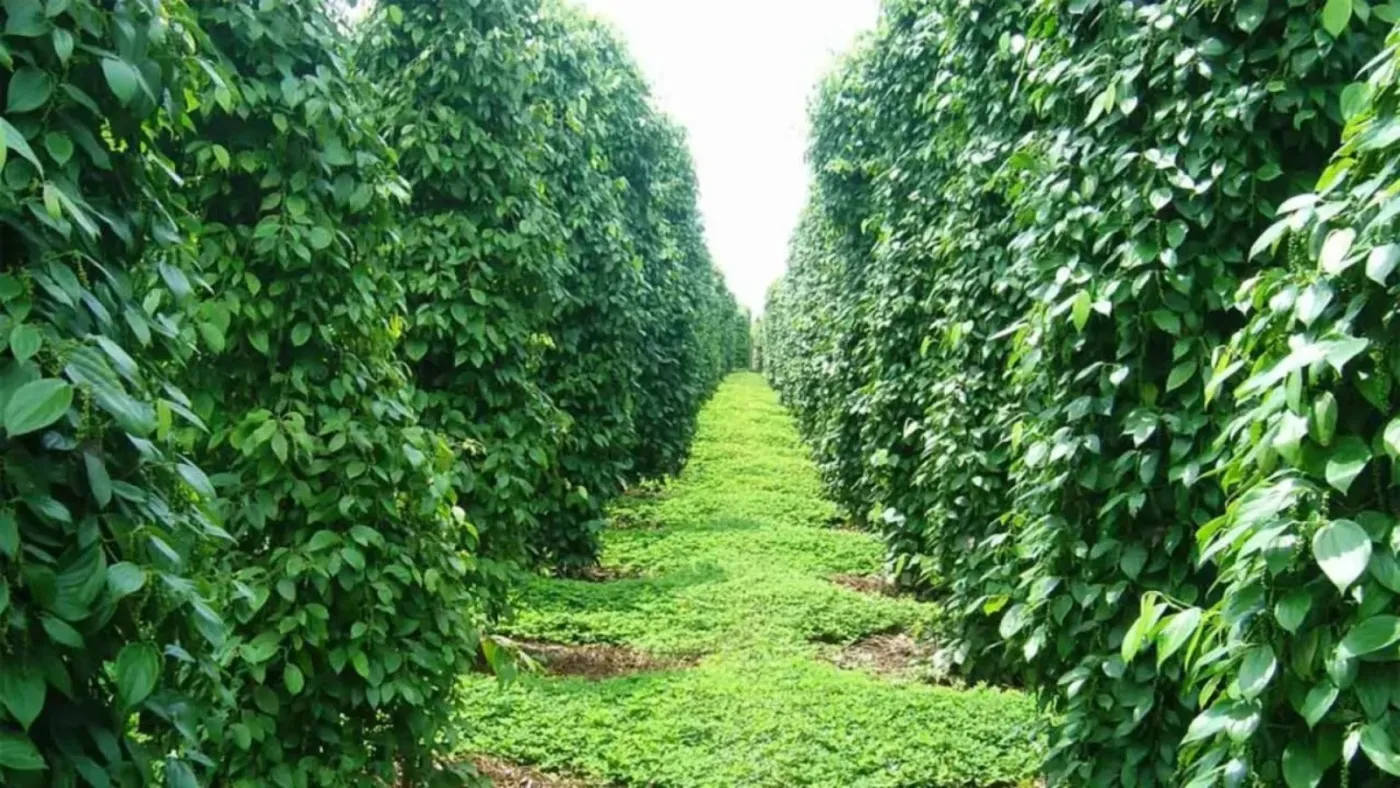
- A walk along the rows. Pepper vines climb posts that can be taller than a person, so you walk between tall green columns. Pickers often use ladders, as the fruit grows high up.
- A short explanation of how the vines grow and how pepper is dried. Some farms explain in English, others only in Vietnamese.
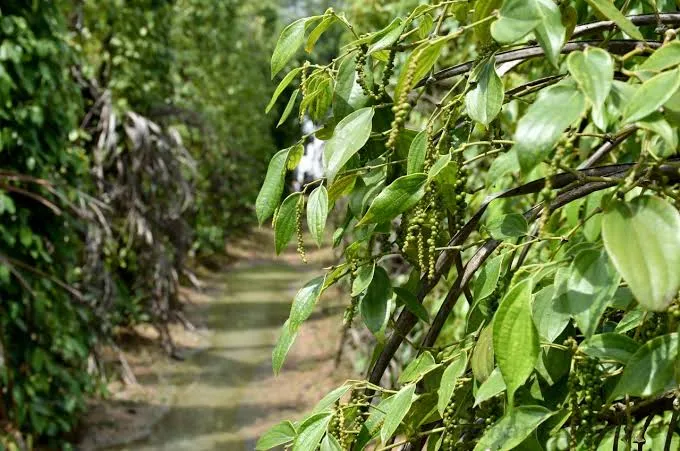
- A look at the pepper up close. The berries hang in small green strings under the leaves, which surprises most people who only know pepper from a grinder.
- The shop. Tasting and buying come at the end. Buying is optional, but this is where the visit is heading.
How pepper is grown
A vine generally takes around three years to start producing, and it is picked by hand in several passes, because the strings do not all ripen at once. Local sources also say that some farmers feed the vines with by-products from the fish sauce barrels, one reason the two products are so often mentioned together.
What to wear and bring
Wear closed or sturdy shoes, as paths can be muddy in the rainy season, and bring a hat, water and sun cream. Ask before you touch or pick anything: this is someone's crop. Some farms invite visitors to try picking in season, but it is not something to count on.
When is the pepper harvest in Phu Quoc?
This is where other guides contradict each other, so here is what they actually say:
- November to February on the lunar calendar is the date most local sources give for the main harvest. That falls roughly from December to March on the normal calendar.
- March to May is the window given by Vietnam Airlines' travel guide, and some local sources stretch the season from February to June.
In practice, the early months of the year are your best chance of seeing berries being picked and spread out to dry, and they also fall within the island's drier months. Outside the harvest the farms are still green and open, you just see less activity. If seeing the harvest is the reason for your visit, ask us first and we'll check what is happening at the time.
Black, white and red pepper: what is the difference?
They all come from the same vine. What changes is when the berries are picked and how they are processed:
- Black pepper: picked before it is fully ripe and dried in the sun until the skin darkens and wrinkles. Strong and spicy, and the one to buy if you want everyday pepper.
- Red pepper: left on the vine until the berries turn red, then dried. Fruitier, with less bite, and it usually costs more because there is less of it.
- White pepper: ripe berries with the outer skin removed. Milder and cleaner, and popular for soups and light sauces.
- Green pepper: the fresh, unripe berries. You will mostly meet it in local cooking, for example with seafood, rather than as a souvenir.
What to buy and how much it costs
Local listings from 2026 give roughly these prices for whole pepper. Treat them as a guide and check on the day:
- Black pepper: about 200,000 to 290,000 VND per kilo.
- Red pepper: about 260,000 to 360,000 VND per kilo.
- White pepper: about 290,000 to 360,000 VND per kilo.
- Small gift jars and pepper salt: from about 30,000 VND.
A few things help you choose well:
- Buy whole, not ground. Whole pepper keeps its flavour much longer, and you can see what you are buying.
- Look at the berries. Good black pepper is even in size and colour, and feels firm and heavy, without dust or light, hollow corns.
- Ask to smell and taste. Fresh pepper smells strong the moment the jar opens.
- Choose sealed packs for travelling. Vacuum or factory-sealed bags are also easier to explain at customs.
- Compare before you buy a lot. You will also see pepper at markets and in shops; our night market guide has more on the market. To see how locals use it, try our Phu Quoc food guide.
Taking Phu Quoc pepper home on the plane
Unlike fish sauce, dried pepper is not a liquid and is usually simple to pack. The thing to check is your home country's rules on food and plant products:
- Dried and sealed is the safest choice. Keep the original pack and the receipt.
- Declare it if asked. Australia and New Zealand require you to declare plant-based food on arrival, and the United States requires you to declare food and agricultural items. Failing to declare can bring a fine.
- Leave fresh pepper behind. Fresh green strings or anything with leaves or stems attached is the most likely to be stopped.
- Check official sources. Rules change and differ by country, so look at your government's customs page before you buy a lot.
For the airport itself, see our Phu Quoc airport guide.
How to combine a pepper farm with the rest of the island
A farm is a short stop, so it works best as part of a bigger day:
- Ho Quoc Pagoda, the island's largest pagoda, on the east coast.
- Sao Beach for lunch and a swim.
- A fish sauce factory and a pearl farm, for the island's other local products.
- Phu Quoc Prison, for its wartime history.
Our South-East Phu Quoc Tour puts these together in one day by road. It leaves around 9:00 and visits a sim wine farm, a cultured pearl farm, Phu Quoc Prison and a fish sauce production factory in the morning, stops at Sao Beach around midday, then continues to Ho Quoc Pagoda and a local pepper farm from around 13:30, with the return to your hotel around 15:30. Times are approximate and can change with the weather. We'll confirm the final details before your booking.

South-East Phu Quoc Tour
A pepper farm, a fish sauce factory and a pearl farm, plus Sao Beach and Ho Quoc Pagoda, in one day by road with hotel pickup.
- From 690,000đ per adult
- About 6.5 hours
Also worth a look: 4 Islands & Cable Car Tour, from 1,300,000đ.
FAQ
Can you visit a pepper farm in Phu Quoc?
Yes. Many family pepper farms welcome visitors, usually for free, with a walk along the rows, a short explanation and a shop at the end. About 30 minutes is enough. Hours vary from farm to farm, so check before making a special trip.
When is the pepper harvest in Phu Quoc?
Local sources do not fully agree. Most give the main harvest as November to February on the lunar calendar, which falls roughly from December to March, and others extend it to May or June. Farms are worth visiting all year, but you are more likely to see picking and drying in the early months of the year.
What is the difference between black, white and red pepper?
They all come from the same vine. Black pepper is picked before it is fully ripe and dried in the sun. Red pepper is left to ripen on the vine. White pepper is ripe pepper with the outer skin removed, which gives a milder flavour.
How much does pepper cost in Phu Quoc?
Local listings from 2026 put whole pepper at roughly 200,000 to 360,000 VND per kilo, depending on the type, with black usually the cheapest. Small gift jars start from about 30,000 VND. Prices change, so check on the day.
Can I take Phu Quoc pepper home on the plane?
Dried pepper in a sealed pack is usually easy to carry. Keep the receipt and declare it on arrival if your country asks you to declare food or plant products. Australia, New Zealand and the United States are among those that do. Do not pack fresh pepper branches. Check your own country's rules before you fly.
Which tour includes a pepper farm?
Our South-East Phu Quoc Tour includes a pepper farm in the afternoon, after Ho Quoc Pagoda, together with a pearl farm, a fish sauce factory, Phu Quoc Prison and Sao Beach, in one day by road.