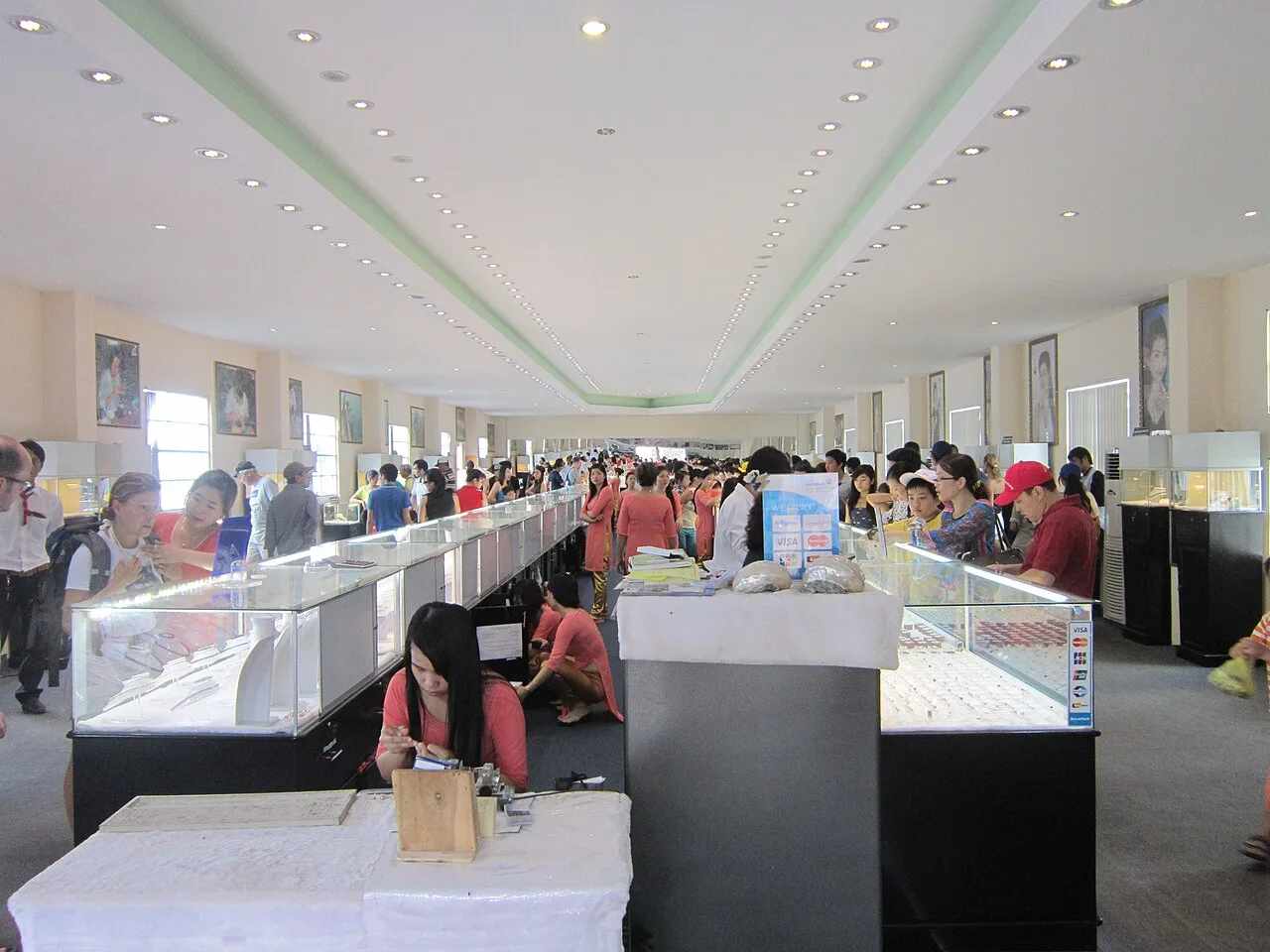
Pearls are one of the products Phu Quoc is best known for, along with fish sauce and pepper. Almost every visitor ends up in a pearl farm at some point, either on their own or as a short stop on a tour.
The visit is free and quick, and it can be interesting if you know what to expect. It is also, in the end, a shop. This guide explains what you will actually see, which farms are the main ones, how pearls are grown, how to buy without regrets and how to fit the stop into a day around the island.
Quick facts about Phu Quoc pearl farms
- Entry: free at the main farms. Buying is optional.
- What you see: a short explanation of how pearls are grown, often an oyster opened in front of you, and a large showroom. The oysters themselves grow out at sea.
- Time needed: about 45 minutes to an hour and a half.
- Best time: morning or early afternoon, when it is easier to catch the explanation before the busiest groups.
- Hours: they differ from farm to farm and sources disagree, so check before you go if you are visiting on your own.
- Main names: Ngoc Hien Pearl, Long Beach Pearl and Quoc An Pearl.
What a visit to a pearl farm is like
Most visits follow the same pattern:
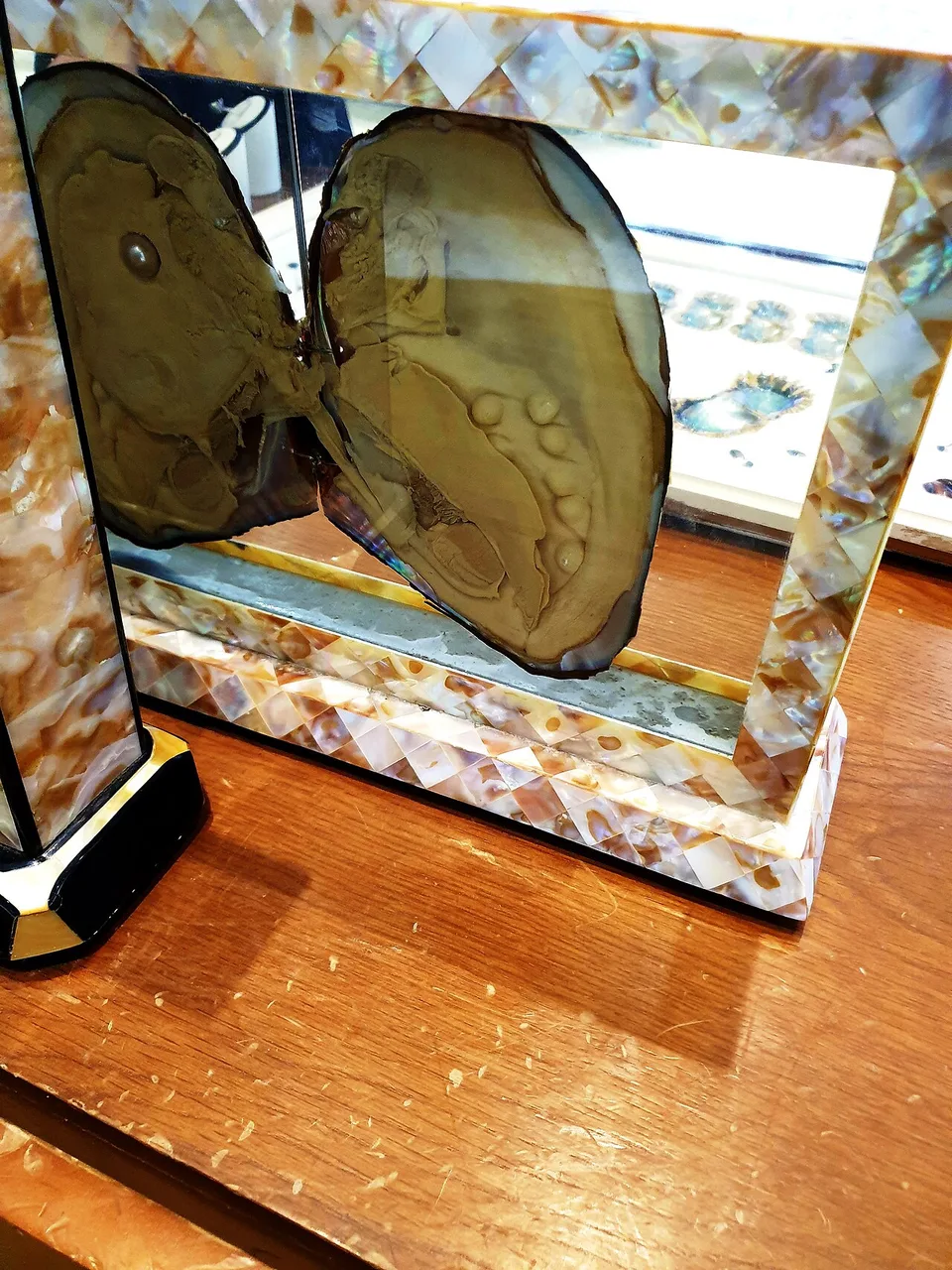
- A short explanation. A member of staff shows how pearl oysters are raised and how a small bead is placed inside the oyster so that it grows a pearl around it. Some farms do a live demonstration.
- An oyster opened in front of you. This is the part most people remember: you see a pearl taken out of a real oyster.
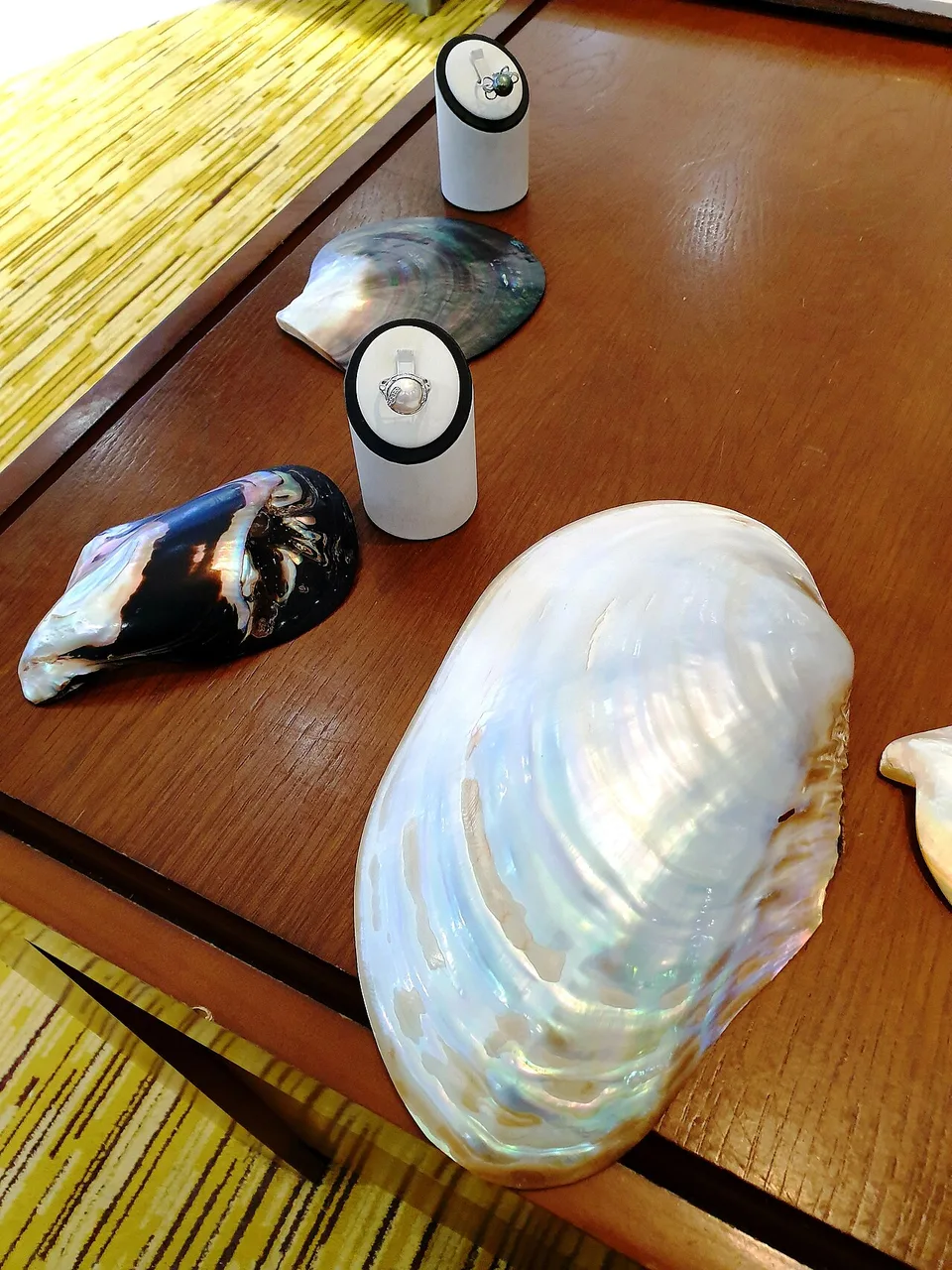
- The showroom. Long glass counters of necklaces, earrings, rings and loose pearls, plus mother-of-pearl shells and carvings. Staff will help you try things on.
Be ready for a sales pitch. Nobody can make you buy, and it is fine to look, say thank you and leave. Some places also sell extra experiences, such as opening your own oyster to keep the pearl; ask the price before you agree.
The main pearl farms in Phu Quoc
There are several pearl companies on the island. These are the names you will see most often:
- Ngoc Hien Pearl: the oldest and best-known name, with pearl farming on the island since the 1990s. It has more than one shop on Phu Quoc and a small museum at its main showroom.
- Long Beach Pearl: a large company with showrooms in the Duong Dong area, including one on Tran Hung Dao road, and also sells shell carvings.
- Quoc An Pearl: a smaller showroom in the Duong To area, south of Duong Dong.
They all offer a similar visit. If you are on a tour, the farm is chosen by the organiser; if you go on your own, pick the one closest to the rest of your day.
How Phu Quoc pearls are grown
The pearls sold here are cultured saltwater pearls. People raise the oysters, but the pearl itself is made by the oyster:
- A healthy oyster is opened slightly and a small bead (the nucleus) is placed inside it.
- The oyster goes back into the sea in a net or cage and slowly covers the bead with layers of nacre, the same shiny material that lines the shell.
- After many months, or years for larger pearls, the oyster is opened and the pearl is taken out.
Not every oyster produces a good pearl, which is one reason prices vary so much. Shape, size, colour and lustre all change the value.
How to buy pearls in Phu Quoc without regrets
A few simple habits go a long way:
- Ask for a certificate that states the pearl type, size, shape and origin. Established farms provide one.
- Be careful with street sellers and market stalls. Pearls sold there may be freshwater, dyed or imitation, whatever the label says.
- Look closely. Real pearls feel cool at first and usually have small irregularities. Perfectly identical, very light beads are a warning sign. Some tests can scratch a pearl, so ask before you try anything.
- Compare before you spend a lot. Prices range from a few tens of US dollars for small pieces to well over a thousand for rare pearls. Look in more than one showroom.
- Ask about the price openly and what is included (setting, chain, box). Pay by card if you can, and keep the receipt with the certificate.
How to get to a pearl farm
The main showrooms are on the west side of the island, in and around Duong Dong and on the road south towards the airport, so they are easy to reach from most hotels.
- Grab or taxi: the simplest option if you go on your own. Most are a short ride from Duong Dong or Long Beach.
- Scooter: easy roads, but rent only if you are used to riding in Vietnam and have the right licence and insurance.
- On a tour: the pearl farm is a regular stop on day tours, so you do not need to plan it separately (see below).
How to fit a pearl farm into your day
A pearl farm visit is short, so it works best as one stop in a longer day:
- With the island's other local products. Pair it with a fish sauce factory and a pepper farm; see our fish sauce guide and pepper farm guide.
- With the south of the island. Phu Quoc Prison, Sao Beach and Ho Quoc Pagoda are all in the south; see our prison guide, Sao Beach guide and Ho Quoc Pagoda guide.
- Before a boat day. Island tours often stop at a pearl farm on the way to the port. Our island hopping guide explains the southern islands.
Our South-East Phu Quoc Tour covers all of this in one day by road: a cultured pearl farm, a fish sauce factory, Phu Quoc Prison, Sao Beach, Ho Quoc Pagoda and a pepper farm. Our 3 Island Speedboat Tour and 4 Islands & Cable Car Tour start with a short pearl farm visit before the boat leaves. The tours do not name a specific farm; if you want one in particular, ask us. We'll confirm the final details before your booking.

South-East Phu Quoc Tour
A cultured pearl farm, a fish sauce factory and a pepper farm, plus Phu Quoc Prison, Sao Beach and Ho Quoc Pagoda, in one day by road with hotel pickup.
- From 690,000đ per adult
- About 6.5 hours
Also worth a look: 3 Island Speedboat Tour, from 800,000đ.
FAQ
Is it free to visit a pearl farm in Phu Quoc?
Yes. The main pearl farms do not charge for entry or for the short explanation of how pearls are grown. You only pay if you buy something, and buying is optional.
Will I see the pearls being farmed in the sea?
Usually not. The oysters grow in the sea, away from the visitor centre. What you visit is the showroom, where staff explain the process, often open an oyster in front of you and show the pearls and jewellery for sale.
How long does a pearl farm visit take?
Around 45 minutes to an hour and a half, depending on how long you spend in the showroom.
Are Phu Quoc pearls real?
The established farms sell cultured saltwater pearls and can give you a certificate with the type, size and origin. The risk is higher with street sellers and market stalls, where pearls may be freshwater, dyed or imitation.
How much do pearls cost in Phu Quoc?
Prices vary a lot with the type, size, shape and lustre: from small pieces of a few tens of US dollars to rare pearls costing well over a thousand. Compare more than one shop before you spend a large amount.
Which tour includes a pearl farm?
Our South-East Phu Quoc Tour includes a cultured pearl farm, together with a fish sauce factory, Phu Quoc Prison, Sao Beach, Ho Quoc Pagoda and a pepper farm. Our island tours also start with a short pearl farm visit before the boat leaves.
Photo credits (Wikimedia Commons): showroom by Bùi Thụy Đào Nguyên, CC BY-SA 3.0; opened oyster and shells by Phương Huy, CC BY-SA 4.0. Images resized and converted to WebP.