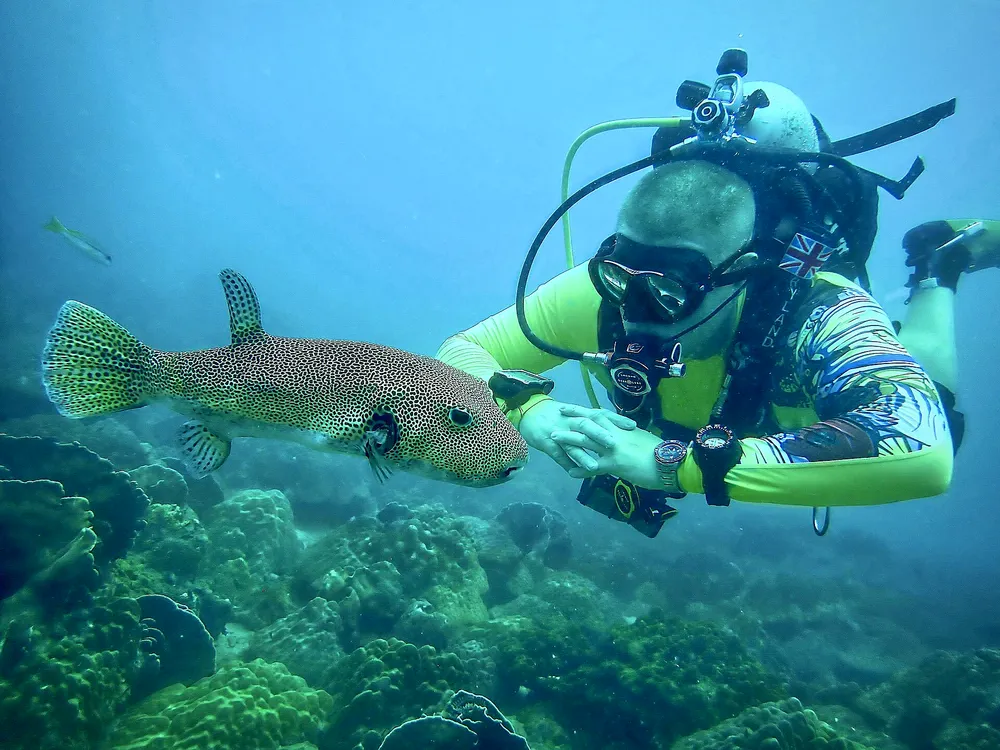
Phu Quoc is not on the list of world-famous dive destinations, and the dive centres on the island are usually the first to say so. What it does offer is warm, sheltered water, short boat rides to small islands and plenty of shallow coral, which makes it one of the easier places in Vietnam to try diving for the first time or to get certified on holiday.
This guide is for travellers deciding whether to dive here at all: when the conditions are best, where the boats actually go, what a dive day looks like and what it costs. It also covers the question most groups end up asking: whether a snorkeling day would suit them better.
Quick answer: is Phu Quoc good for diving?
- Good for: try dives, Open Water courses and relaxed, shallow fun dives.
- Not for: big animals. Sharks, turtles and manta rays are not what you come here for.
- Depth: most dives are 6 to 12 metres; a few southern sites go deeper.
- Visibility: usually modest, often 2 to 8 metres, and it changes from day to day.
- Water: around 28 to 31 °C all year; a shorty or rash guard is enough.
- Best season: November to April.
- Main dive area: the small islands south of An Thoi.
Best time to dive in Phu Quoc
The dry season, from November to April, brings the calmest sea and the most reliable boat trips. This is also when the northern sites are dived. From May to October, the rainy season, trips still run on many days, but wind and waves can cancel dives at short notice, and dive centres often confirm the site only a few days ahead.
- November to April: calmest conditions, both southern and northern sites.
- May to October: mainly the southern islands, more cancellations, check the forecast the day before.
- Late November to mid-December: dive guides report jellyfish season. Wear a rash guard or thin wetsuit.
Even in the best months, visibility can drop after a windy night, so keep a spare day in your plans if diving matters to you. For the weather month by month, see our best time to visit Phu Quoc guide.
Phu Quoc dive sites: south and north
Almost all diving happens in two areas. Which one you visit depends on the season and on the dive centre.
South: the An Thoi islands
The group of small islands south of An Thoi is the main dive area for most of the year and part of a marine protected area. Boats leave from the southern harbour and reach the first site in about 45 minutes. Sites often mentioned by local dive centres:
- May Rut (Hon May Rut): a shallow reef to about 10 metres on the inner island, good for mixed groups and snorkelers; the west side goes deeper, to around 25 metres.
- Hon Dam Ngoai: 12 to 18 metres, known for nudibranchs, and a sheltered choice when the wind picks up.
- Hon Roi: calm water around 10 metres, near a pearl farm, often with cuttlefish.
- Hon Kim Quy: a sloping reef down to 18 to 20 metres.
- Pineapple Point (Hon Thom): the north side reaches about 18 metres; the south side drops to around 35 metres with strong currents and is for advanced divers only.
North: Turtle Island and nearby reefs
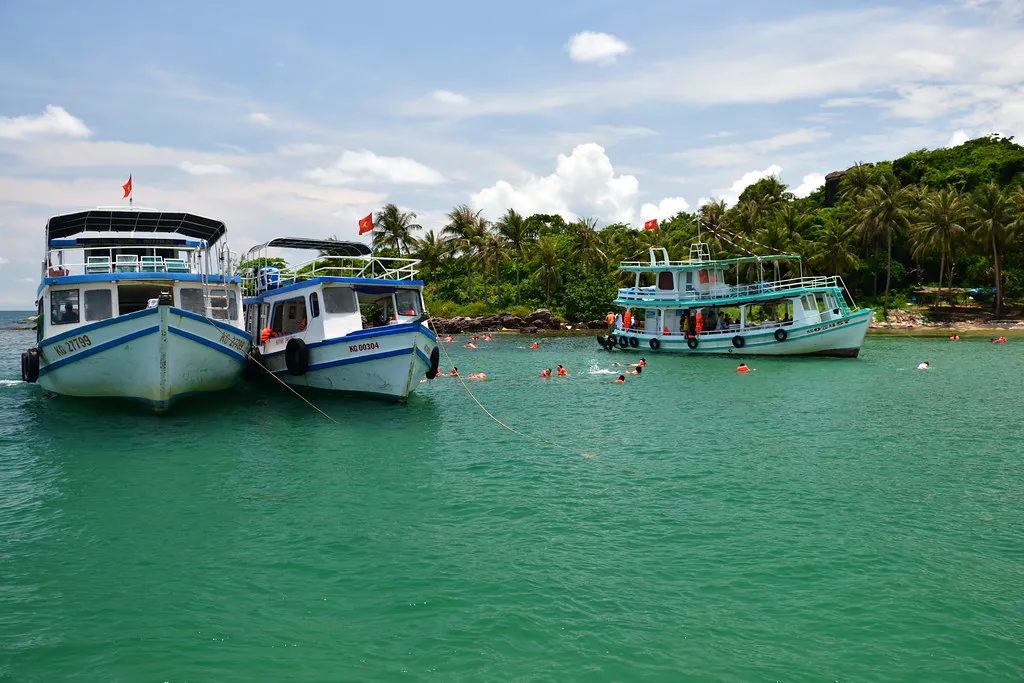
In the dry season some centres also go north, to Turtle Island (Hon Doi Moi) and a couple of small islands nearby. The reefs are shallow, mostly 3 to 8 metres, which makes them popular for training and first dives. Despite the name, you should not expect to see turtles. The same area is where our snorkeling tour spends the day when conditions allow.
What you will see underwater
Think small and colourful rather than big and dramatic. Dive centres and divers' reports regularly mention:
- Common: hard and soft corals, anemones with anemonefish, nudibranchs, cuttlefish, octopus, moray eels, pufferfish, barrel sponges and schools of small reef fish.
- Sometimes: seahorses, pipefish, banded sea snakes around May Rut and bamboo sharks hiding under rocks.
- Not expected: large sharks, turtles, manta rays or big pelagic fish.
If you enjoy looking closely, especially with a camera, the macro life is the highlight. If you are after walls, big schools or strong colour at depth, Phu Quoc is better as a warm-up than as the main event.
Who can dive: try dives, courses and age limits
- No certificate: try dive. A PADI Discover Scuba Diving day usually includes a short briefing, a skills session in shallow water and two dives with an instructor next to you. You do not get a certificate.
- Get certified: Open Water. About three days with theory (often done online before you arrive), shallow-water training and open-water dives. After it, you can dive to 18 metres with a buddy anywhere in the world.
- Already certified: fun dives. Bring your certification card or digital proof and your logbook. Advanced certification is needed for the deeper sites such as the south side of Pineapple Point.
- Age: the usual minimum is 10 years. Children under 15 get a junior certificate with a shallower depth limit.
- Health: you fill in a medical questionnaire before diving. Some conditions need a doctor's sign-off first, so check before you travel.
You should be comfortable in the water. If someone in your group is not a confident swimmer, a snorkeling day with life jackets is the easier option for them (see below).
What a typical dive day looks like
Most dive trips follow the same pattern, though times change with the centre and the weather:
- Hotel pickup between about 7:30 and 8:30. The drive to the southern harbour takes from 30 minutes to over an hour, depending on where you stay.
- Boat leaves around 9:00 and reaches the first site in about 45 minutes.
- Two dives of roughly 40 to 60 minutes each, with lunch on the boat in between.
- Back at the harbour around 14:00 to 15:00, then the transfer to your hotel.
Many dive boats also take snorkelers, who swim at the surface while the divers are down. That can work for couples where only one person dives, but the snorkel time depends on the dive schedule.
How much diving in Phu Quoc costs
Prices depend on the centre, the season and what is included. As a guide, these are the prices one PADI dive centre on the island listed in October 2026:
- Two fun dives (certified divers): about US$100.
- Try dive (Discover Scuba Diving, two dives): about US$110.
- PADI Open Water course (about three days): about US$450.
- Snorkeling on the dive boat: about US$45.
These prices usually include equipment, a dive computer, the guide or instructor, lunch on the boat and hotel transfers. Other operators advertise lower prices, but check what is included, how many people are on the boat and how far you will be transferred. Centres usually accept US dollars or Vietnamese dong. Always ask for a written quote for your dates.
How to choose a dive centre
There are several PADI and SSI centres on the island. Recent reviews help, but these questions tell you more:
- Which sites are planned for your date, and what happens if the weather changes?
- How many divers per guide underwater, and how many people on the boat?
- Is the instructor's language one you are comfortable learning in?
- What exactly is included: equipment, wetsuit, dive computer, lunch, transfers, marine park fees?
- How long is the transfer from your hotel to the harbour?
- Are the underwater photos on their page and in reviews from Phu Quoc, or from somewhere else?
We do not run dive trips or recommend a specific centre. If you are not sure which sea day fits your group, ask us and we will help you compare.
Safety: flying, insurance and the nearest chamber
- Do not fly too soon. Wait at least 12 hours after a single dive and 18 hours or more after several dives or several days of diving. Plan your last dive day around your flight; see our Phu Quoc airport guide.
- No decompression chamber on the island. Local dive guides say the nearest one is in Ho Chi Minh City, a flight away.
- Insurance: check that your travel insurance covers scuba diving, the depth you plan to dive and evacuation.
- Protect the reef: do not touch or stand on coral, keep your fins off the bottom and use reef-safe sun cream.
Dive or snorkel? How to decide
Because so much of the coral around Phu Quoc is shallow, you see a lot from the surface. Diving is worth it if you want to learn, already dive or want time close to the reef. Snorkeling is usually the better choice if:
- You are not certified and do not want to spend a day on a course.
- You travel with children, older relatives or anyone who is not keen on scuba gear.
- Only one person in your group dives, and the others would spend the day waiting on the boat.
- You want a relaxed sea day with lunch and photos rather than a dive schedule.
- You fly out the next morning.
Our Snorkeling Tour: Dancing with Coral is a full day by boat from Bach Dang Park, with hotel pickup options from 8:30. When conditions allow it heads to the Doi Moi (Turtle Island) area in the north, the same reefs used for first dives, and it includes lunch on board, a guide, snorkeling equipment, a life jacket, and photo and flycam support. If you prefer the southern islands, the 3 Island Speedboat Tour visits May Rut, Mong Tay and Gam Ghi, where you can see shallow natural coral, with lunch included. Routes can change with the weather and sea conditions. We'll confirm the final details before your booking.

Snorkeling Tour: Dancing with Coral
Not certified, or diving with people who are not? This full day on the water visits the shallow coral used for first dives in the north, with lunch, guide and equipment.
- From 1,700,000đ per adult
- Lunch included
Also worth a look: 3 Island Speedboat Tour, from 800,000đ.
FAQ
Is Phu Quoc good for scuba diving?
It is a good place to learn and to enjoy easy, shallow dives in warm water. Most dives are 6 to 12 metres deep and visibility is usually modest, often 2 to 8 metres. It is not a destination for big marine life: expect coral, nudibranchs and small reef fish rather than sharks, turtles or manta rays.
When is the best time to dive in Phu Quoc?
November to April, the dry season, when the sea is calmer and boat trips run most reliably. The southern islands near An Thoi are dived for most of the year when the weather allows, while the northern sites are mainly dived in the dry season. Dive guides also report jellyfish from late November to mid-December, so a rash guard or thin wetsuit helps.
Can I dive in Phu Quoc without a certificate?
Yes. Dive centres run try dives (PADI Discover Scuba Diving) for beginners with no certificate, with an instructor beside you the whole time. The usual minimum age is 10. To dive on your own with a buddy, you need a course such as PADI Open Water, which takes about three days.
How much does diving in Phu Quoc cost?
As a guide, one PADI centre listed about US$100 for two fun dives, US$110 for a two-dive try dive and US$450 for a three-day Open Water course in October 2026, usually with equipment, lunch on the boat and hotel transfers included. Prices change between centres and seasons, so ask for a written quote.
Is there a decompression chamber in Phu Quoc?
Local dive guides say there is no decompression chamber on the island; the nearest one mentioned is in Ho Chi Minh City. That is one more reason to dive within your limits and to check that your travel insurance covers diving and evacuation.
Should I dive or snorkel in Phu Quoc?
Snorkeling is the better choice if you are not certified and do not want a course, if you travel with children or non-divers, or if you want a relaxed day with lunch and photos. Much of the coral around the islands is shallow, so you see a lot from the surface. Our Snorkeling Tour spends the day around coral areas in the north, and the 3 Island Speedboat Tour visits May Rut, Mong Tay and Gam Ghi in the south.
Photo credits: diver and pufferfish at Samaesan Island, Thailand, by Ryland.cairns, CC0; diver silhouette near Apo Island, Philippines, by Clotho, CC BY-SA 4.0; boats and snorkelers at Hon Thom (Flickr) by Cha già José, CC BY-SA 2.0. Images resized and converted to WebP. The two diving photos are from other dive areas, not Phu Quoc.